
Conforming Bandages
There is 1 product.
Active filters
About Conforming Bandages
Flexible Dressing Retention for Comfortable Wound Care
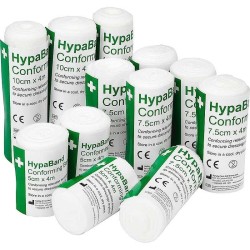
Conforming bandages provide essential flexible wound dressing retention enabling secure comfortable coverage across workplaces, care facilities, sports environments, and first aid contexts throughout England, Scotland, Wales, and Northern Ireland. These versatile bandages comprise stretch fabric materials conforming to body contours, securing wound dressings without excessive pressure whilst accommodating movement and varied anatomical areas. Organisations rely on conforming bandages for securing wound dressings on awkward areas including joints and contoured body parts, maintaining dressing position during activity, providing comfortable retention without restriction, enabling frequent dressing changes, and general wound management. Modern conforming bandages incorporate features including appropriate stretch providing security without constriction, soft comfortable materials, breathable fabric enabling air circulation, varied widths accommodating different body areas from fingers through limbs, and suitable lengths enabling proper application. The provision of conforming bandages demonstrates commitment to comprehensive wound care, supports comfortable effective dressing retention, enables professional injury management, and fulfils essential first aid requirements across environments with wound care needs throughout professional contexts.
The implementation of conforming bandages directly supports effective wound management, patient comfort, and demonstration of professional wound care capability. Wound dressings require secure retention maintaining position and cleanliness, with inappropriate bandaging causing discomfort, constriction, or inadequate retention compromising wound care. Conforming bandages address these requirements by providing flexible retention accommodating movement, conforming to body contours particularly joints and irregular areas, maintaining comfort through appropriate stretch preventing constriction, enabling air circulation through breathable materials, and supporting frequent dressing changes in wound care protocols. Wound care applications include general injury dressing retention, joint wound coverage where rigid bandages restrict movement, care facility wound management requiring comfortable retention, sports injury dressing security, and workplace injury treatment. Organisations benefit from conforming bandages through effective comfortable wound care, enhanced compliance when bandages do not restrict activity, prevented complications from appropriate retention, and professional wound management capability. Modern conforming bandages incorporate features such as latex-free construction, enhanced conformability, and varied stretch grades throughout England, Scotland, Wales, and Northern Ireland.
Selecting and implementing conforming bandages requires assessment of wound care requirements, appropriate specification, and integration with wound management protocols across organisations throughout the UK. Clinical and safety managers should evaluate typical wound scenarios determining bandage width requirements, assess body areas typically bandaged influencing size selection, consider patient or casualty comfort needs, and calculate adequate stock levels. Bandage selection should prioritise appropriate widths from narrow 2.5cm for fingers through medium 7.5cm for limbs to wide 15cm for trunk areas, suitable lengths typically 4m rolls, comfortable stretch materials, breathable fabric, and adequate quantities ensuring comprehensive stocks across varied sizes. Implementation protocols should encompass integration with wound care supplies and first aid kits, staff or first aider training on proper bandaging technique including appropriate tension and securing methods, wound management procedures, and documented supply management. Quality assurance measures should include regular stock checks across bandage sizes, usage monitoring, restocking procedures, and wound care audit integration. Modern conforming bandage management may incorporate standardised wound care protocols and supply tracking. Organisations should establish wound management procedures including appropriate bandage selection, integrate with clinical or first aid governance, and maintain documentation. Care facilities require comprehensive conforming bandage stocks supporting regular wound care. Staff education should address conforming bandage purposes, correct application avoiding excessive tension causing constriction, securing techniques, circulation checking, and appropriate bandage changes maintaining wound care standards. Storage should protect bandages maintaining cleanliness whilst ensuring accessibility. By implementing conforming bandages alongside professional wound care protocols, organisations throughout England, Scotland, Wales, and Northern Ireland demonstrate commitment to effective wound management, patient comfort, professional care standards, and comprehensive capability supporting optimal wound healing through appropriate comfortable dressing retention across all care, clinical, and first aid environments requiring wound treatment.